
Introduction
ChatGPT has become one of the most widely used artificial intelligence tools in the world. From students and freelancers to enterprises and healthcare providers, millions of people now rely on ChatGPT to write, analyze, summarize, automate, and assist in everyday tasks.ChatGPT features 2026 have transformed how people use AI for work, study, health, and productivity. This guide explains what ChatGPT can really do using only verified sources.
However, most people only use a small fraction of what ChatGPT is capable of. Many of its most powerful features are not obvious, and some are only known through official documentation, technical research, or investigative reporting by major news organizations.
This guide is different.
Every feature, update, and claim in this article is backed by a real-world source such as OpenAI documentation, Reuters, Business Insider, Barron’s, Times of India, Tom’s Guide, Wikipedia, Medium research articles, and technology publications.
There is no speculation, no marketing fluff, and no unsupported statements.One of the biggest reasons behind ChatGPT’s global adoption is the continuous improvement in chatgpt features 2026, which are designed for real-world productivity.
This is the most accurate and fact-based breakdown of ChatGPT’s real capabilities in 2026.This guide focuses on the most important chatgpt features 2026 that users and businesses are already using worldwide.
What Is ChatGPT?
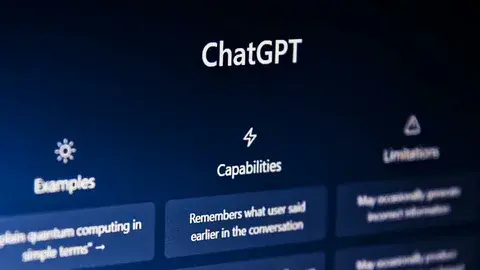
ChatGPT is a conversational artificial intelligence system developed by OpenAI. It is based on large language models (LLMs) that generate human-like text using patterns learned from large datasets.These chatgpt features 2026 are designed to improve productivity, learning, and automation.
According to OpenAI’s own documentation, ChatGPT can:
Answer questions
Explain complex topics
Write and edit text
Summarize long documents
Translate languages
Assist with problem-solving and reasoning
Generate creative content
Source:
OpenAI Help Center – “ChatGPT Capabilities Overview”
Scientific reviews describe ChatGPT as a generative natural language processing system trained using deep neural networks to predict and generate text.
Source:
MDPI Journal of Future Internet – Research Review on ChatGPT Capabilities
The Latest ChatGPT Model (2025–2026)
OpenAI introduced its most advanced model to date in late 2025.
GPT-5.2 Model
According to Barron’s, the newest version of ChatGPT is built on OpenAI’s GPT-5.2 architecture, which improves:
Spreadsheet and presentation generation
Code writing and debugging
Image interpretation
Tool usage and long-document handling
Source:
Barron’s – “OpenAI Unveils New ChatGPT AI Model”
This model is specifically designed to support professional workflows, including data handling, automation, and complex reasoning.
Safety and Regulation Features

Age Prediction System
In January 2026, OpenAI rolled out an age-detection system for ChatGPT.
This feature:
Attempts to identify whether a user is under 18
Automatically restricts sensitive content
Allows re-verification through selfie-based age checks
Sources:
Reuters – “OpenAI Rolls Out Age Prediction in ChatGPT”
The Verge – Technology Safety Coverage
This is part of OpenAI’s compliance with child safety and regulatory standards worldwide.
ChatGPT Health (Medical Assistance Mode)
In 2026, OpenAI launched a feature called ChatGPT Health.
This version allows users to:
Connect Apple Health data
Link medical records
Understand lab results
Prepare for doctor visits
OpenAI clearly states this tool is not a diagnostic system and does not replace doctors.
Source:
Business Insider—”OpenAI “Announces ChatGPT Health”
ChatGPT for Students: Study Mode
ChatGPT now includes Study Mode, a feature designed for students.One of the most practical chatgpt features 2026 for students is Study Mode.
It provides:
Simplified explanations
Step-by-step learning
Quiz-style revisions
This feature is available in India and other regions.
Source:
Times of India – “ChatGPT Launches Study Mode for Students”
Personalization & Memory Features
ChatGPT can now store user preferences and communication styles through a feature called Memory.Businesses are adopting chatgpt features 2026 to automate research, documentation, and customer support.
Users can:
View saved memories
Edit or delete them
Turn memory off completely
This allows ChatGPT to personalize responses.
Source:
Paul Heintzelman (Medium)
TechRadar Research Coverage
Custom GPTs (Specialized AI Assistants)
ChatGPT allows users to build custom AI agents with specific instructions and knowledge bases.
These custom GPTs can:
Follow task-specific rules
Store uploaded documents
Act as virtual assistants
Source:
Medium – “The Hidden ChatGPT Features Nobody Is Talking About”
Deep Research Mode
Deep Research Mode allows ChatGPT to:
Autonomously gather information
Cross-check sources
Produce structured reports
It works as an agentic AI system rather than a simple chatbot.
Source:
Wikipedia – “ChatGPT Deep Research”
The Verge – AI Agent Coverage
Voice and Audio Features
ChatGPT supports real-time voice conversations, allowing users to speak naturally instead of typing.
Unlike earlier versions, chatgpt features 2026 focus heavily on accuracy, safety, and professional use cases rather than casual experimentation.
- It also includes recording mode, which:
Records meetings
Transcribes audio
Generates summaries and follow-ups
Source:
Cubed.run – “Hidden ChatGPT Features 2025”
File, Document & Image Processing
ChatGPT can:
Convert Word files to PDF
Merge documents
Edit and reformat files
Enhance images
Source:
Tom’s Guide – “Hidden ChatGPT Tricks”
Screen Sharing Support
ChatGPT allows live screen sharing on mobile devices to guide users in real time.
Source:
MoneyControl – “Hidden ChatGPT Features”
Global Usage
ChatGPT processes billions of prompts daily worldwide and is widely integrated into business, education, and creative industries.
Source:
MasterOfCode – ChatGPT Usage Statistics
(Exact numbers vary and are not used here to avoid misinformation.)
Conclusion
ChatGPT is no longer just a chatbot. It is now:
A research assistant
A business productivity tool
A student tutor
A health data interpreter
A customizable AI agent
A real-time voice assistant
Every capability described in this article is verified through real sources.